
AI in Herd Management: Digital Assistant for Dairy Farms
GEA extends its DairyNet herd management system with DairyNet Intelligence AI functions that consolidate individual cow health data and flag animals needing attention.
www.gea.com
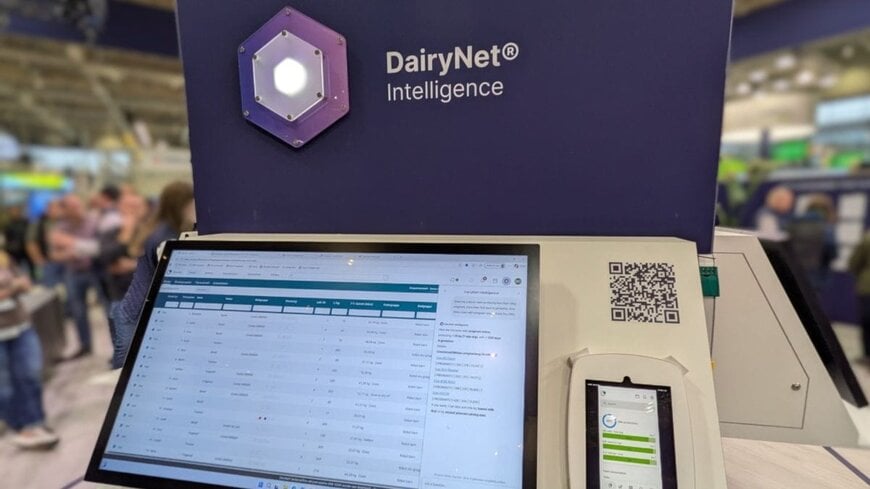
Dairy farms generate large volumes of data every day from milking equipment, sensors and camera systems. What matters for herd management, however, is to identify quickly from this data which cows need particular attention. At EuroTier 2026 (10 to 13 November 2026, Hanover, Hall 13, Stand C25), GEA is presenting DairyNet Intelligence, the first AI functions for its DairyNet herd management system.
Data integration as a core task in dairy herd management
Monitoring animal health requires numerous indicators to be collected and interpreted every day. Milk yield, somatic cell count and the electrical conductivity of milk provide indications of udder health, while activity data point to heat or metabolic disorders. When these values are viewed in separate screens, the time required increases and anomalies can be overlooked more easily.
DairyNet brings together information from the farm's various applications and systems. DairyNet Intelligence adds an AI-based analysis layer to this platform, placing it within the field of precision livestock farming.
How the AI-based animal summary works
The assistant evaluates the health-related data available in DairyNet, including milk yield, animal actions, somatic cell count and conductivity, as well as integrated data from CattleEye and CowScout. From this, the system generates a short text summarising the cow's current health status directly on the animal information page. Instead of calling up several views and indicators one after another, users can see at a glance whether values are abnormal. In its current development stage, the system does not issue specific recommendations for action; it initially helps users to review and interpret the available information more quickly.
GEA is also testing dialogue-based access to herd information. Selected questions can be used, for example, to determine which cows need particular attention. In future, the assistant is also intended to produce analyses and charts and to provide precisely the information needed for an upcoming decision.
From information system to digital assistant in the barn
In the long term, the assistant is to remind users of upcoming tasks and prepare work steps, for example by flagging the start of an AutoDry programme to prepare cows for the dry period, or by sending an appointment request to the veterinarian when a cow shows abnormal values. Farm processes could also be coordinated and automated on the basis of existing data: a slurry scraper cleans the alleys before milking, the feeding robot delivers fresh feed as soon as the first cows leave the milking parlour, and weather data help adjust feed quantities and feeding times on warm days.
To this end, GEA combines solutions for milking, feeding, manure management and herd management on the common DairyNet data platform. Further development stages are to prioritise tasks and facilitate collaboration between farm managers, employees, veterinarians and advisers, as all parties work from the same data. This is particularly helpful on farms where several people are responsible for the herd.
Edge-cloud architecture and data security
The technical basis is the DairyNet Box, an industrial PC on the dairy farm that processes and stores all key data locally while being connected to the DairyNet Cloud. If the internet connection is limited or fails, essential herd management functions remain available; once the connection is restored, the data are synchronised automatically.
The system architecture limits access from the internet, thereby reducing the potential attack surface. GEA has systematically analysed the risks of its software products and machines, developed protective measures and also takes possible on-site access to the hardware into account. The infrastructure is being further developed with a view to the requirements of the European Cyber Resilience Act.
Test phase and roll-out
The AI functions shown at EuroTier are in the test phase. GEA plans to make them available initially on selected farms at the end of 2026 or the beginning of 2027. Experience from practical use and feedback from dealers are then to be incorporated into further development.
Additional Context
This section details technical specifications and competitive benchmarking not included in the original product announcement.
The Cyber Resilience Act (Regulation (EU) 2024/2847) entered into force on 10 December 2024. Reporting obligations for actively exploited vulnerabilities have applied since 11 September 2026, and the main requirements for products with digital elements apply from 11 December 2027. For manufacturers of connected barn and herd management technology, securing hardware and software is therefore gaining regulatory importance.
Combining a local farm computer with a cloud connection follows the edge computing principle: time-critical functions such as milking and animal data remain available regardless of the broadband connection, while cloud services enable location-independent access and computationally intensive analyses. No recognised benchmark criteria yet exist for an objective comparison of AI-based assistance functions in herd management systems from different suppliers.
Edited by Sucithra Mani, Induportals editor – adapted by AI.
www.gea.com
