
www.agritechmag.com
12
'26
Written on Modified on
Mechanized Mulching Replaces Field Stubble Burning in Rice Production
CNH deployed New Holland tractor and mulcher equipment to help a Thai grower manage crop residue mechanically without open burning.
www.cnh.com
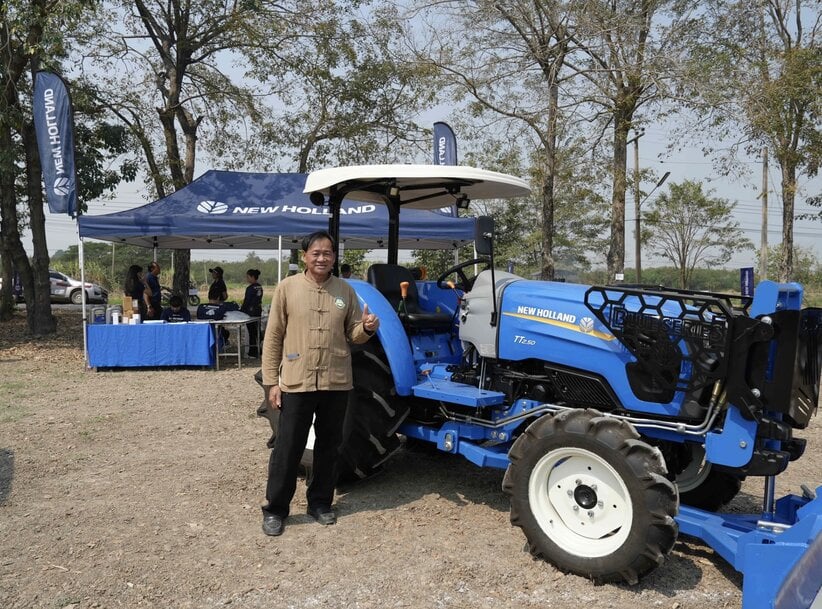
Application Area: Post-Harvest Residue Management
Industry Sector: Agricultural Machinery and Crop Production
Pichai Tosa operates a rice and mung bean cultivation enterprise in Nakhon Sawan province, Thailand, and serves as president of a local rice production collective. In conventional regional grain farming, open burning has served as the primary method to rapidly clear fields between cropping sequences. In the central plains of Thailand, approximately 4.8 million tons of rice straw are burned each year, causing significant air pollution, greenhouse gas emissions, microbial degradation in topsoil, and long-term depletion of organic soil carbon.
Overcoming Post-Harvest Biomass Disposal Barriers
Clearing crop stubble mechanically requires balancing operational speed, fuel economy, and effective biomass fragmentation to prepare seedbeds for subsequent plantings. In response to regional residue management needs, Tosa initiated field trials with mechanized biomass reduction equipment during the harvest period. The objective centered on converting leftover straw into incorporated organic matter rather than burning it off.
Tosa stated that growers previously lacked knowledge regarding the environmental consequences of stubble burning, noting that modern technical developments now provide operational alternatives.
Tractor and Mulcher Integration for In-Situ Soil Incorporation
The technical implementation paired a New Holland TT3.50 utility tractor with a dedicated rotary mulcher attachment. The mulching mechanism slices and shreds tough rice straw directly across the paddy surface, dispersing chopped organic material evenly across the ground. The shredded biomass is then incorporated directly into the topsoil strata, accelerating biological decomposition, preserving beneficial soil microorganisms, and improving overall moisture retention.
Mark Brinn, Managing Director for Southeast Asia and Japan at CNH, explained that equipment must align with field conditions and operating economics, emphasizing that machinery, technical training, and field support help transform crop residue into a useful agricultural resource.
Agronomic and Environmental Performance
The mechanized approach demonstrated effective post-harvest residue clearance without burning, mitigating ambient particulate emissions while sustaining soil carbon reserves for upcoming cropping cycles. This field deployment mirrors previous residue mitigation initiatives led by CNH, including the mechanized baling and farmer training programs implemented across northern India under the Sustainable Environment Solution project.
Edited by Romila DSilva, Induportals Editor, with AI assistance.
www.cnh.com
