
www.agritechmag.com
07
'26
Written on Modified on
Mobile AI Lab Detects Crop Pests Early
Fraunhofer researchers have developed a mobile diagnostic platform combining AI, spectral sensing and molecular tests to identify quarantine pests directly in orchards and vineyards.
www.fraunhofer.de
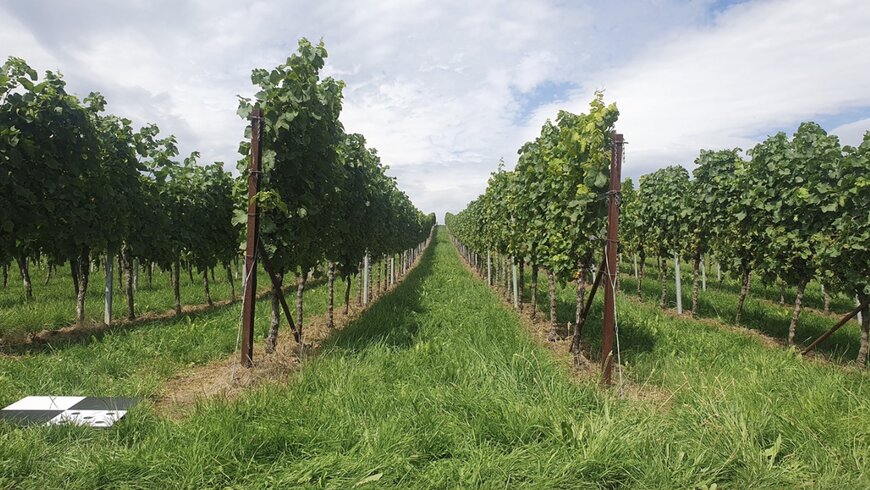
Climate change and global trade are accelerating the spread of harmful plant pests in Germany, increasing the pressure on fruit farming and viticulture to detect infestations earlier and respond faster. To address this challenge, Fraunhofer researchers and industry partners have developed PhenoTruck®, a mobile laboratory that enables on-site identification of dangerous plant diseases using a combination of artificial intelligence, drone-based sensing and molecular diagnostics.
Rising pest pressure in fruit farming and viticulture
Non-native pests and phytoplasma diseases represent a growing risk for crops such as grapevines, apples, pears and apricots. Some of these organisms are classified as quarantine pests, meaning infestations must be reported immediately due to their potential to cause widespread economic damage. Traditional inspection methods rely on visual assessment by trained personnel followed by laboratory confirmation, a process that is labor-intensive and slow, especially when large cultivation areas must be surveyed.
This delay can be critical. In the case of grapevine diseases such as Flavescence dorée, rapid containment is essential because the pathogen can spread epidemically from plant to plant.
PhenoTruck® as a mobile diagnostic platform
Within the PhenoTruckAI project, researchers from Fraunhofer Institute for Factory Operation and Automation IFF and Fraunhofer Institute for Biomedical Engineering IBMT worked with RLP AgroScience GmbH to move advanced diagnostics directly into the field. The result is PhenoTruck®, an off-road laboratory vehicle designed to operate in orchards and vineyards.
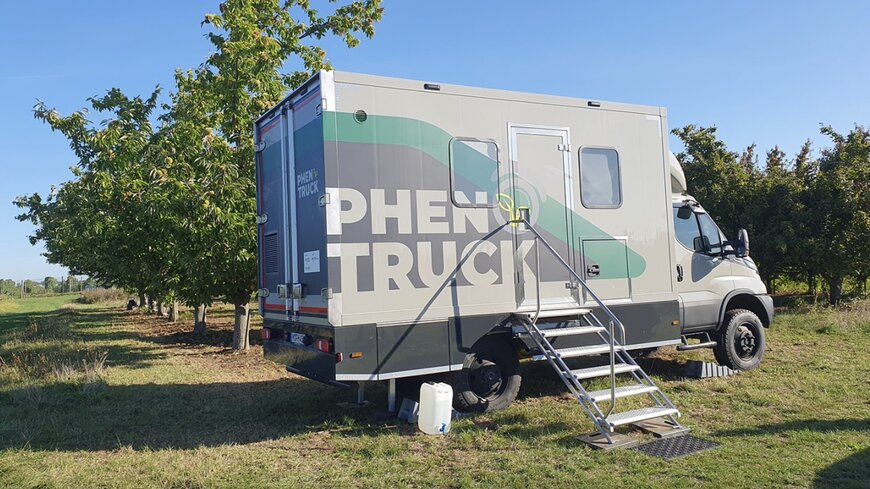
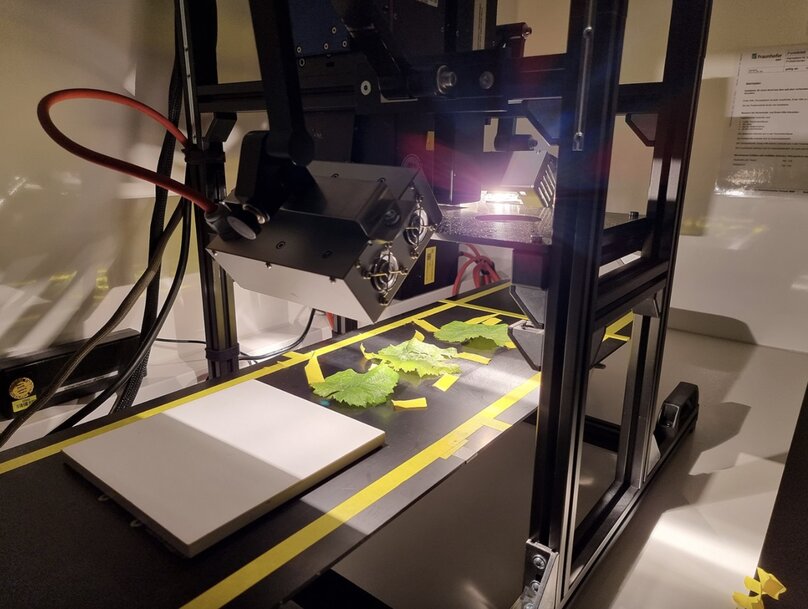
The platform integrates multiple diagnostic technologies. Drone-based multispectral sensors are used first to scan large areas and identify zones with abnormal vegetation patterns. These data are combined with field observations documented through a dedicated assessment app. Suspect plants are then examined more closely using hyperspectral cameras inside the mobile lab, which detect subtle leaf discolorations that are not reliably visible to the human eye.
Hyperspectral sensing and AI-based analysis
Hyperspectral analysis plays a central role in early detection. Phytoplasma infections alter leaf reflectance in specific wavelength ranges before clear visual symptoms appear. By analyzing these spectral signatures, the system can flag potentially infected plants at an early stage.
Artificial intelligence models developed by Fraunhofer IFF automate the interpretation of this data. According to the researchers, the models detect phytoplasma infections with an accuracy of 95 to 99 percent. They are also trained to differentiate between closely related grapevine diseases such as Flavescence dorée, Bois noir and Palatinate grapevine yellows. This distinction is important because not all phytoplasma diseases pose the same epidemiological risk. In current trials, the system achieved around 80 percent accuracy in differentiating between these diseases.
Molecular confirmation directly in the field
While spectral sensing and AI enable rapid pre-selection, definitive confirmation of phytoplasma infections still requires molecular biological testing. PhenoTruck® therefore includes an on-site laboratory for DNA-based diagnostics. A loop-mediated isothermal amplification (LAMP) test adapted for mobile use delivers results in about one hour, faster than conventional PCR analysis and without the need to transport samples to a stationary laboratory.
This combination of early screening and immediate confirmation significantly shortens the time between suspicion and verified diagnosis, enabling faster countermeasures to limit the spread of dangerous pests.
Applications beyond quarantine pests
Field trials have already been conducted in wine-growing regions of Rhineland-Palatinate and Italy, focusing on grapevine diseases, as well as on widely occurring phytoplasma infections such as apple proliferation and pear decline, which can lead to total crop loss. Beyond its immediate use in plant protection, the PhenoTruck® platform is intended as a flexible research tool for future applications in agricultural diagnostics, disease monitoring and sensor-based crop management.
By bringing together AI, spectral imaging and molecular biology in a single mobile system, the project demonstrates how digital technologies can reduce inspection effort, improve diagnostic reliability and strengthen resilience in fruit farming and viticulture under changing climatic conditions.
www.fraunhofer.de
