
Land-Based Aquaculture Reshapes Salmon Supply
Land-based recirculating aquaculture systems offer salmon processors greater control over supply consistency, biosecurity, and product quality as pressure mounts on coastal farming.
marel.com
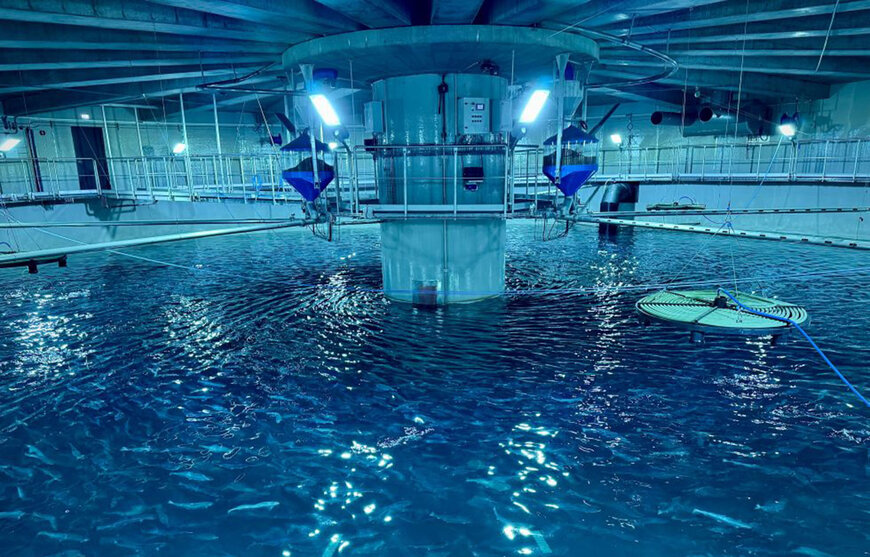
The salmon processing industry operates within the wider aquaculture sector and depends on stable, predictable supplies of high-quality fish. Rising global demand for salmonoids, combined with biological, environmental, and regulatory constraints on coastal cage farming, has exposed vulnerabilities in traditional supply chains. Processors increasingly face variability in volumes, fluctuating quality, disease-related losses, and sustainability scrutiny linked to open-water farming.
Against this backdrop, land-based aquaculture using recirculating aquaculture systems (RAS) is emerging as a technically driven alternative. Although still at an early commercial stage for salmon production, RAS represents a structural change in how fish can be farmed, supplied, and integrated with downstream processing operations.
Industry Pressures Driving Change
Coastal salmon farming offers limited control over environmental conditions. Water temperature shifts, parasite exposure, and disease outbreaks can directly affect growth rates, mortality, and harvest timing. These factors introduce uncertainty for processors planning throughput, logistics, and market delivery. In addition, long transport distances between offshore farms and processing facilities increase costs and expose product quality to handling risks.
At the same time, sustainability requirements are tightening. Environmental impacts such as nutrient discharge, escapes, and ecosystem interactions have drawn regulatory and public attention, adding further constraints to coastal expansion.
Recirculating Aquaculture Systems as a Technical Response
RAS technology addresses these challenges by moving production on land into closed-loop systems. Water is continuously treated and reused through mechanical and biological filtration, allowing farms to operate with significantly reduced freshwater intake compared with flow-through systems. Temperature, oxygen levels, and water flow can be regulated to maintain stable growth conditions, improving predictability of harvest volumes and timing.
From an operational perspective, RAS enables high levels of biosecurity. Physical separation from natural water bodies reduces exposure to external parasites and pathogens, while tank-level isolation limits the spread of disease within facilities. Waste removal and water recycling minimize pollutant discharge, aligning production with increasingly strict environmental requirements.
Operational Implications for Processors
For salmon processors, proximity between land-based farms and processing plants offers measurable logistical advantages. Shorter transport distances reduce handling time and cold-chain complexity, supporting consistent product quality. While RAS facilities must account for energy demand, water availability, and local infrastructure costs, the ability to locate production closer to processing and end markets changes the economics of supply planning.
Although comprehensive production benchmarks are still developing, early RAS operations demonstrate improved control over fish health, more uniform harvest sizes, and reduced exposure to biological shocks compared with open-water systems. These factors translate into greater operational reliability rather than headline productivity gains.
Foundations for the Next Stage of Integration
Land-based aquaculture is not a new concept; freshwater fish farming dates back thousands of years, and flow-through systems have long been used for species such as trout and tilapia. What differentiates modern RAS is the level of process control enabled by advanced filtration, materials, and monitoring technologies developed over recent decades.
Understanding how RAS differs from traditional flow-through and coastal cage systems is a prerequisite for evaluating its role in future salmon supply chains. As adoption expands, the key question for processors is not whether RAS can produce salmon, but how its controlled production model can be integrated with processing operations to stabilize supply, improve yields, and support quality objectives.
The next article examines how RAS facilities can be directly aligned with processing infrastructure to address supply chain constraints in the growing salmon market.
www.marel.com
